




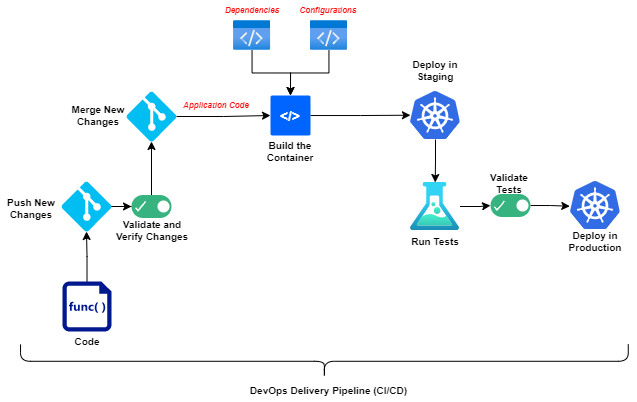
The rapid growth of cloud-native applications has transformed the way organizations build, test, deploy, and manage software systems. Businesses now rely heavily on automation pipelines and container orchestration platforms to maintain scalability, deployment consistency, and operational agility. One of the most effective approaches for streamlining modern software delivery involves architecting a GitLab CI/CD pipeline for multi-stage Docker builds, which allows development teams to optimize container workflows, accelerate release cycles, and maintain highly organized deployment environments across multiple stages of the software lifecycle.
As infrastructure continues evolving toward distributed and microservices-based architectures, automation frameworks and container orchestration systems have become essential components of modern DevOps operations. By combining continuous integration, continuous delivery, and infrastructure automation, organizations can build highly efficient systems that support rapid innovation while maintaining operational consistency.
The Evolution of DevOps and Cloud-Native Infrastructure
Traditional software deployment methods often relied on manual server configuration and isolated deployment processes. Modern DevOps practices have shifted toward infrastructure automation, containerization, and declarative deployment models that improve collaboration between development and operations teams.
Container technology allows applications and their dependencies to be packaged into lightweight, portable units that run consistently across development, staging, and production environments. This consistency reduces environmental discrepancies and simplifies application deployment across diverse platforms.
At the same time, CI/CD pipelines automate testing, validation, and deployment workflows, ensuring that software updates move efficiently through each stage of the release process.
Understanding Multi-Stage Docker Builds
Multi-stage Docker builds are designed to optimize container images by separating the build environment from the runtime environment. This approach improves efficiency by ensuring that only the essential application artifacts are included in the final image.
For example, development dependencies and temporary build files can remain in intermediate stages, while the production image contains only the compiled application and required runtime libraries.
Benefits of Multi-Stage Container Builds
Using multi-stage Docker builds provides several important advantages:
- Reduced container image size
- Faster deployment and startup times
- Improved maintainability of Dockerfiles
- Enhanced consistency across environments
- Better organization of build workflows
These benefits contribute to more efficient containerized applications and streamlined deployment operations.
CI/CD Pipelines as the Foundation of Automation
Continuous Integration and Continuous Delivery pipelines automate the process of building, testing, and deploying applications. GitLab CI/CD has become a popular platform for implementing these workflows due to its integrated tooling and scalable automation capabilities.
A well-designed CI/CD pipeline typically includes multiple stages such as source validation, dependency installation, application compilation, automated testing, container image creation, and deployment orchestration.
Automated Workflow Coordination
Automation pipelines coordinate all stages of software delivery, ensuring that tasks execute in the correct order while maintaining consistency across environments.
This automation eliminates repetitive manual tasks and allows teams to focus on application innovation and infrastructure optimization.
Containerization and Infrastructure Consistency
Containerization ensures that applications behave consistently regardless of the environment in which they run. By packaging dependencies, runtime libraries, and configuration files together, containers create predictable execution environments.
This consistency is especially important in distributed infrastructures where applications may run across multiple servers, cloud providers, or Kubernetes clusters.
Standardized Deployment Environments
Standardized container environments simplify operations by ensuring that applications maintain the same behavior throughout development, testing, and production workflows.
The Role of GitLab in Modern DevOps Practices
GitLab provides a unified platform for source control, CI/CD automation, container registry management, and deployment orchestration. This integrated ecosystem simplifies DevOps workflows by centralizing critical development and operational tools.
Development teams can define pipeline configurations directly within repository files, allowing automation workflows to evolve alongside application code.
Integrated Development and Deployment Workflows
Integrated tooling improves collaboration between development and operations teams by creating a single source of truth for both application code and deployment logic.
Kubernetes and Scalable Container Orchestration
As containerized applications scale, orchestration platforms become essential for managing deployment, networking, scaling, and service discovery. Kubernetes has emerged as the leading orchestration platform for cloud-native infrastructure.
Kubernetes automates many operational tasks, including workload scheduling, health monitoring, rolling updates, and resource allocation. This enables organizations to manage complex distributed systems efficiently.
Dynamic Scaling and Resource Optimization
Kubernetes supports dynamic scaling by automatically adjusting workloads based on resource usage and application demand. This flexibility allows organizations to maintain efficient infrastructure utilization while supporting fluctuating traffic patterns.
Infrastructure as Code and Declarative Management
Infrastructure as Code has become a core principle of modern DevOps operations. Instead of manually configuring systems, administrators define infrastructure behavior through declarative configuration files.
This approach ensures repeatability, consistency, and version-controlled infrastructure management across all environments.
Benefits of Declarative Infrastructure
Declarative configuration models provide:
- Predictable deployment behavior
- Easier rollback and version tracking
- Improved collaboration between teams
- Consistent infrastructure replication
- Simplified operational auditing
These advantages support scalable and maintainable infrastructure operations.
Enhancing Collaboration Through Automation
Modern DevOps environments depend heavily on collaboration between developers, system administrators, and infrastructure engineers. Automation frameworks improve collaboration by standardizing workflows and reducing operational complexity.
Shared automation pipelines and infrastructure definitions ensure that all teams follow consistent operational practices throughout the software lifecycle.
Centralized Operational Standards
Centralized standards improve communication and reduce inconsistencies between teams, enabling faster and more reliable deployment cycles.
Optimizing Software Delivery Pipelines
Efficient delivery pipelines are essential for organizations aiming to release updates rapidly while maintaining high operational quality. CI/CD pipelines automate critical validation processes such as code testing, security scanning, and artifact generation.
This automation accelerates release cycles and improves deployment confidence.
Streamlined Release Automation
Automated release pipelines support continuous software delivery by ensuring that validated code moves smoothly through each deployment stage.
Cloud-Native Architecture and Distributed Systems
Cloud-native architectures emphasize scalability, resilience, and service modularity. Applications are often divided into smaller microservices that can be independently deployed and managed.
Containers and orchestration platforms provide the foundation for managing these distributed services effectively.
Flexible Service Deployment Models
Microservices-based deployments allow organizations to update individual components independently, improving development agility and operational flexibility.
Security and Reliability in Automated Infrastructure
Automation frameworks contribute significantly to infrastructure reliability by ensuring consistent configuration management and deployment execution.
Containerized environments also improve operational isolation, helping maintain organized application dependencies and predictable runtime behavior.
Consistent Operational Governance
Automated governance policies ensure that deployment workflows follow predefined organizational standards across all environments.
Monitoring and Observability in Containerized Systems
Observability is essential for understanding application performance and infrastructure behavior in distributed environments. Modern monitoring systems collect logs, metrics, and traces that provide visibility into system operations.
Automation tools simplify observability configuration by ensuring that monitoring agents and logging standards are deployed consistently across all systems.
Enhanced Infrastructure Transparency
Improved visibility allows teams to monitor application health, analyze performance trends, and maintain operational awareness across distributed platforms.
GitOps and Declarative Deployment Strategies
GitOps has emerged as a highly effective operational model for Kubernetes-based environments. In GitOps workflows, infrastructure and deployment configurations are stored in version-controlled repositories, ensuring that system state is fully traceable and reproducible.
Changes are applied automatically through synchronization tools that continuously align cluster state with repository definitions.
Benefits of GitOps-Based Operations
GitOps workflows provide:
- Centralized infrastructure management
- Improved deployment consistency
- Version-controlled operational changes
- Faster rollback capabilities
- Enhanced collaboration between teams
These capabilities support scalable and highly organized Kubernetes operations.
Kubernetes Synchronization and Automated State Management
Managing synchronization across Kubernetes clusters requires automated systems capable of continuously monitoring and reconciling infrastructure state.
Modern synchronization platforms ensure that cluster configurations remain aligned with repository definitions, reducing configuration drift and improving deployment reliability.
Consistent Multi-Cluster Management
Automated synchronization simplifies the management of multiple Kubernetes clusters by ensuring that all environments follow standardized operational configurations.
Building Future-Ready DevOps Ecosystems
Organizations adopting cloud-native technologies increasingly prioritize scalability, automation, and operational flexibility. Modern DevOps ecosystems combine CI/CD pipelines, containerization, orchestration platforms, and declarative infrastructure management to create resilient deployment architectures.
This integrated approach supports rapid innovation while maintaining high levels of operational consistency and infrastructure efficiency.
Strengthening Deployment Consistency with GitOps
As Kubernetes environments continue to expand, organizations rely more heavily on declarative deployment synchronization to maintain consistent infrastructure states across clusters.
In advanced cloud-native infrastructures, many teams focus on implementing GitOps with ArgoCD for Kubernetes cluster synchronization to automate deployment reconciliation, improve operational visibility, and maintain highly scalable cluster management practices across distributed systems.
Conclusion
Modern DevOps operations rely on a combination of containerization, CI/CD automation, orchestration platforms, and declarative infrastructure management to support scalable software delivery.
By optimizing Docker build pipelines, automating deployment workflows, and adopting Kubernetes-based orchestration strategies, organizations can achieve highly efficient and reliable infrastructure operations. At the same time, GitOps practices provide a powerful framework for maintaining deployment consistency and operational transparency across distributed environments.
Together, these technologies form the foundation of future-ready cloud-native ecosystems capable of supporting continuous innovation, scalable infrastructure management, and streamlined software delivery workflows.


Comments (0)