




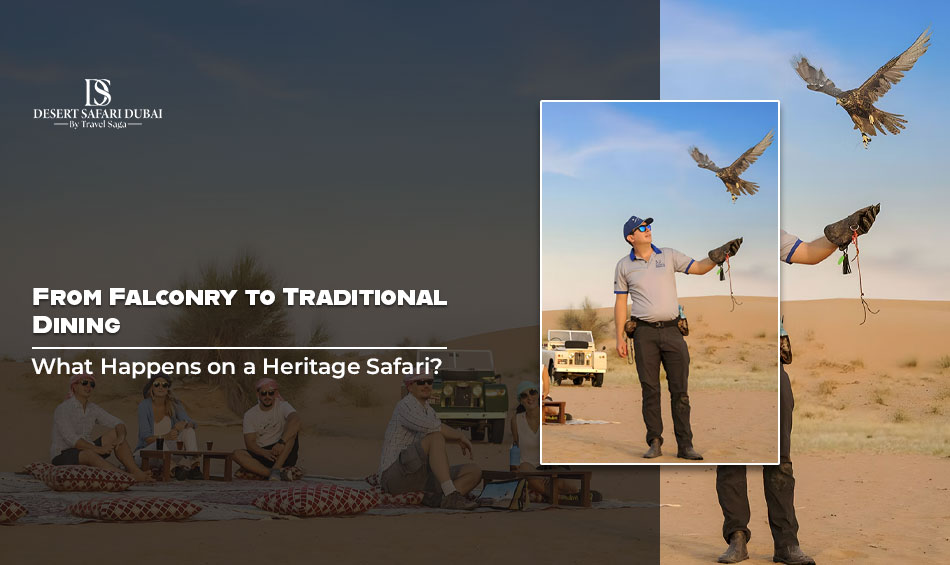
Dubai’s desert is more than a landscape of rolling dunes. It has a long connection with traditional travel, hospitality, wildlife and the customs that shaped life in the UAE. A heritage safari offers visitors a chance to explore these connections through cultural demonstrations, desert journeys and traditional food rather than focusing only on high-speed activities.
A Heritage Desert Safari Dubai experience can include falconry, camel riding, vintage vehicle drives, Bedouin-inspired hospitality and traditional dining, depending on the package. Some experiences take place in the morning, others around sunset, while selected retreats continue overnight. Understanding what each activity involves can help you choose an experience that matches your interests and gives you a deeper appreciation of Emirati heritage.
What Makes a Heritage Safari Different?
A heritage safari focuses on the relationship between people, culture and the desert. Instead of making dune bashing the centre of the itinerary, it introduces travellers to traditions associated with desert life, including camel travel, falconry, food preparation and hospitality.
The experience varies by tour. A morning cultural safari may focus on a traditional village and Emirati breakfast, while an evening outing may combine a vintage vehicle journey with dinner and time beneath the desert sky.
This variety makes it worth checking the itinerary before booking. Not every heritage safari includes the same activities, meal arrangements or accommodation.
Falconry: Discovering a Long-Standing Arabian Tradition
Falconry has an important place in the cultural history of the Arabian Peninsula. Historically, falcons were valued for their role in hunting, and knowledge of birds, training and the natural environment was passed between generations.
During selected heritage safaris, visitors can watch a falconry demonstration and learn about the birds and their connection with traditional desert life. Seeing a falcon up close also offers an opportunity to understand the skill and care involved in working with these remarkable birds.
The format depends on the experience. Some tours include a dedicated falconry session, while others incorporate it into a broader programme of cultural activities. If falconry is one of your main interests, confirm that it is specifically listed in your chosen itinerary.
Camel Riding and the Traditional Desert Journey
Camels are closely associated with travel and survival in the Arabian desert. Their ability to travel across arid landscapes made them valuable to communities that depended on movement between settlements and resources.
A camel ride provides a slower way to experience the dunes. Rather than travelling across the landscape at speed, visitors can take in the surroundings and appreciate the scale and quietness of the desert.
Selected heritage experiences include a short camel ride or a camel caravan as part of a wider cultural programme. The duration varies, so it is worth checking the details if you want camel riding to be a significant part of your visit.
Vintage Vehicles and Desert Exploration
Some heritage safaris use classic or vintage-style vehicles to create a different atmosphere from a conventional modern 4x4 tour. These drives combine desert scenery with an appreciation of older motoring traditions.
For example, selected experiences around Al Marmoom feature a vintage Mercedes-Benz G-Class alongside cultural activities, camel experiences and traditional dining. Other heritage experiences may use vintage Land Rover vehicles for nature-focused journeys.
These tours are not necessarily designed around thrilling dune bashing. Their appeal is the journey itself, the landscape and the cultural experiences along the way.
What Happens at a Bedouin-Inspired Camp?
A Bedouin-inspired camp provides a setting for experiencing aspects of traditional desert hospitality. Guests may be welcomed with Arabic coffee and dates, followed by demonstrations or activities that introduce them to local customs.
Depending on the package, the programme may include traditional bread making, Arabic coffee preparation, henna painting, storytelling or cultural performances. These activities help explain how food, hospitality and community have been connected with desert life.
The experience is generally designed to introduce visitors to cultural traditions in an accessible way. It is best viewed as a guided cultural encounter rather than a complete representation of every aspect of historical Bedouin life.
Traditional Dining: More Than Just a Meal
Food is often one of the most memorable parts of a heritage safari. Traditional dining introduces visitors to regional flavours while providing time to relax after exploring the desert.
Depending on the experience, meals can range from a traditional Emirati breakfast to a multi-course Arabic dinner. Arabic coffee and dates may also form part of the welcome, reflecting their familiar role in regional hospitality.
Some evening experiences feature a more elaborate dinner, while morning cultural safaris may conclude with breakfast and local dishes. Since menus and meal formats differ, check what is included if dining is an important reason for choosing a particular tour.
Travellers with allergies or dietary requirements should communicate these before the experience and confirm what arrangements can be made.
Morning, Evening or Overnight: Which Experience Fits You?
The time of day changes the atmosphere of a heritage safari and the activities available.
A morning experience is suitable for visitors who prefer an early start and want to explore the desert before the warmer part of the day. Depending on the package, it may focus on wildlife, traditional culture, falconry, camel travel and breakfast.
An evening heritage safari offers a different setting as the dunes change colour around sunset. Visitors may combine a vintage vehicle journey, cultural activities and dinner, with selected experiences also offering stargazing.
For travellers who want to extend their visit, a heritage overnight safari Dubai experience can combine cultural activities with an overnight stay. Selected packages include a traditional dinner, stargazing, desert accommodation and breakfast the following morning. Some extended experiences also offer an optional sunrise hot-air-balloon flight.
The key difference is how much time you want to spend in the desert and which activities matter most to you.
Why Al Marmoom Is Worth Considering
Al Marmoom is a desert destination associated with several cultural and heritage experiences. Its landscape provides a setting for activities such as camel riding, nature drives, traditional dining and overnight stays.
Selected tours combine these experiences with vintage vehicles, falconry and Bedouin-inspired hospitality. An overnight option can add the opportunity to enjoy the desert after dark and return to the landscape at sunrise.
However, experiences in Al Marmoom are not all identical. Compare the itinerary, accommodation, transport arrangements and included activities rather than choosing by location alone.
What Should You Know Before Booking?
A little preparation can help you make the most of a heritage safari.
-
Check the activities: Falconry, camel riding and cultural demonstrations are not included in every package.
-
Review the meal arrangements: Confirm whether your tour includes breakfast, dinner or refreshments.
-
Choose a suitable time: Consider whether you prefer an early morning, sunset or overnight experience.
-
Dress comfortably: Lightweight clothing and comfortable footwear are useful for outdoor activities.
-
Prepare for temperature changes: A light extra layer can be helpful after sunset, especially during cooler months.
-
Ask about accessibility and age restrictions: Requirements can vary depending on the vehicle, activities and accommodation.
These details help you choose a safari that fits your expectations instead of assuming that all heritage tours follow the same programme.
Conclusion
A heritage safari offers a different way to discover Dubai’s desert, bringing together falconry, camel travel, vintage vehicles, traditional hospitality and regional food. Each activity provides a glimpse into customs and experiences connected with the UAE’s desert heritage, while the surrounding landscape adds its own sense of place.
When comparing Desert Safari Dubai Tours, think about whether you are most interested in cultural demonstrations, traditional dining, nature, sunset views or an overnight stay. The best choice is the one that matches your interests and clearly explains which activities are included.
For visitors who want to understand more than the adventure side of the desert, a heritage safari can provide a meaningful balance of exploration, cultural learning and hospitality.
FAQs
1. What is a Heritage Desert Safari Dubai experience?
It is a desert tour that focuses on Emirati and Arabian heritage, traditional hospitality, nature and cultural activities. Depending on the package, it can include falconry, camel riding, vintage vehicles and traditional meals.
2. Is falconry included in every heritage safari?
No. Falconry is available on selected experiences. Check the itinerary to confirm whether a demonstration is included.
3. What food can I expect during a heritage safari?
Meal options vary. Some experiences include a traditional Emirati breakfast, while selected evening tours offer Arabic or Bedouin-style multi-course dinners. Arabic coffee and dates may also be served.
4. Can I ride a camel during a heritage safari?
Selected packages include camel riding or a camel caravan. The duration and format depend on the experience you choose.
5. What is a heritage overnight safari Dubai experience?
It is a cultural desert experience that continues into the night. Depending on the package, it may include heritage activities, dinner, stargazing, overnight accommodation and breakfast the next morning.


Comments (0)