


Nobody replaces their sheets on a schedule. Most of us keep a set until it feels thin, looks grey or tears at a corner — and then act surprised at how much better the replacement feels. Sheets do have a working life, though, and sleeping on worn-out ones costs you comfort long before they actually fall apart.
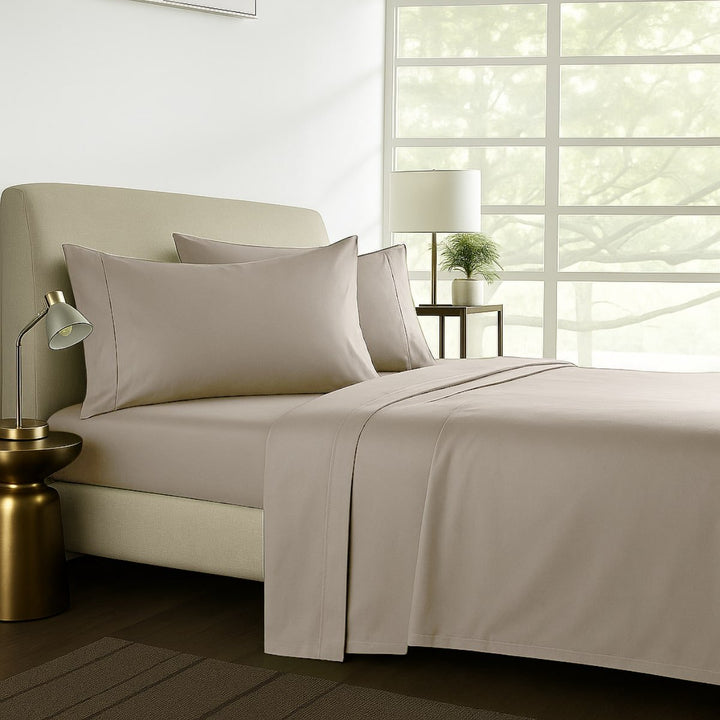
For most cotton sheets washed weekly, two to three years is a fair run. The fabric gradually thins with every wash cycle, the fibres break down, and the surface starts to feel rough or pilling appears where your body moves most. Percale and sateen both age this way; the weave changes the feel, not the lifespan.
There are clearer signs than the calendar. If the fitted sheet's elastic has gone slack and the corners will not stay on, the set is done. If the fabric has gone yellow or grey in the middle despite proper washing, that is fibre damage, not dirt. And if you can hold the sheet up to the light and see through patches of it, it is offering you almost no barrier between you and the mattress.
Rotation stretches the life of every set you own. Two or three sets per bed, washed and used in turn, age far more slowly than one set worked every single week. It also means laundry day never leaves you choosing between a bare mattress and a set you meant to replace months ago.
When you do replace them, retire the old set to the parts of life that destroy bedding anyway: painting drop sheets, car boot liners, pet bedding, camping. Good cotton earns a second career before it becomes a rag.
If you are shopping for a fresh bed sheet australia wide, buy for the way you actually live: weekly hot washes need sturdy cotton, line drying suits percale beautifully, and a spare set in the cupboard is worth more than a slightly higher thread count on a single set.


Comments (0)