




A less defined waist is not always caused by overall weight. High Definition Liposculpture in Islamabad may be considered when localized fat around the abdomen, flanks, or waist affects body proportions and remains noticeable despite a stable lifestyle. The procedure is intended to reshape selected areas rather than promise a specific waist size or replace weight management.
Why the Waist Can Look Less Defined
Body shape is influenced by genetics, fat distribution, bone structure, muscle development, skin elasticity, and weight. Even people who exercise regularly can have localized fullness around the waist.
The abdomen and flanks also work visually as one region. Treating only the front of the abdomen may not produce the desired change if significant fullness remains at the sides.
Contouring Rather Than Simply Removing Fat
The objective of a contour-focused procedure is to create a smoother relationship between the abdomen, waist, and surrounding areas.
For example, a surgeon may assess the front and side profile together. The amount of fat removed from each region can be planned according to overall proportions rather than treating every area independently.
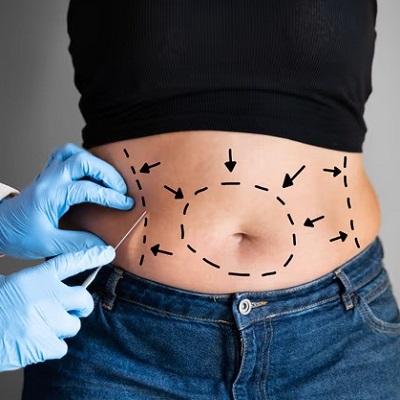
What Happens During Assessment?
During consultation, the surgeon examines the thickness and distribution of fatty tissue, evaluates skin elasticity, and discusses the patient's desired changes.
Photographs or markings may be used to understand the shape from multiple angles. The surgeon can then explain which areas are realistically treatable and whether the desired definition is compatible with the patient's anatomy.
Can It Create Abdominal Definition?
Liposculpture can reduce fat that obscures existing contours, but it does not automatically create strong abdominal muscles. If someone wants a highly muscular appearance, fat removal alone may not produce that result.
The final appearance depends partly on underlying muscle structure and the amount of fat and skin covering it.
What About Loose Skin?
Skin laxity can affect the outcome. If the abdominal skin has limited elasticity, reducing the underlying fat may leave some looseness.
This is particularly relevant for people who have experienced significant weight loss or pregnancy. A surgeon may discuss whether another procedure or a different treatment plan would be more appropriate.
Recovery After Abdominal Contouring
Swelling and bruising can temporarily make the abdomen appear larger or uneven. Tightness and tenderness may also occur.
Compression garments are commonly recommended after body-contouring procedures, depending on the surgeon's technique and instructions. Light movement may be encouraged, while strenuous activity should generally wait until the medical team considers it appropriate.
Maintaining the New Contour
The result is not a substitute for a healthy lifestyle. Although treated fat cells are removed, remaining fat cells can enlarge if significant weight is gained.
Maintaining a relatively stable weight helps preserve body proportions over time.
Conclusion
Liposculpture may help improve waist and abdominal contours when localized fat is the main concern. However, the result depends on fat distribution, skin quality, anatomy, and the extent of treatment. A consultation is essential to determine whether contouring can realistically provide the type of waist or abdominal definition a person wants.


Comments (0)